
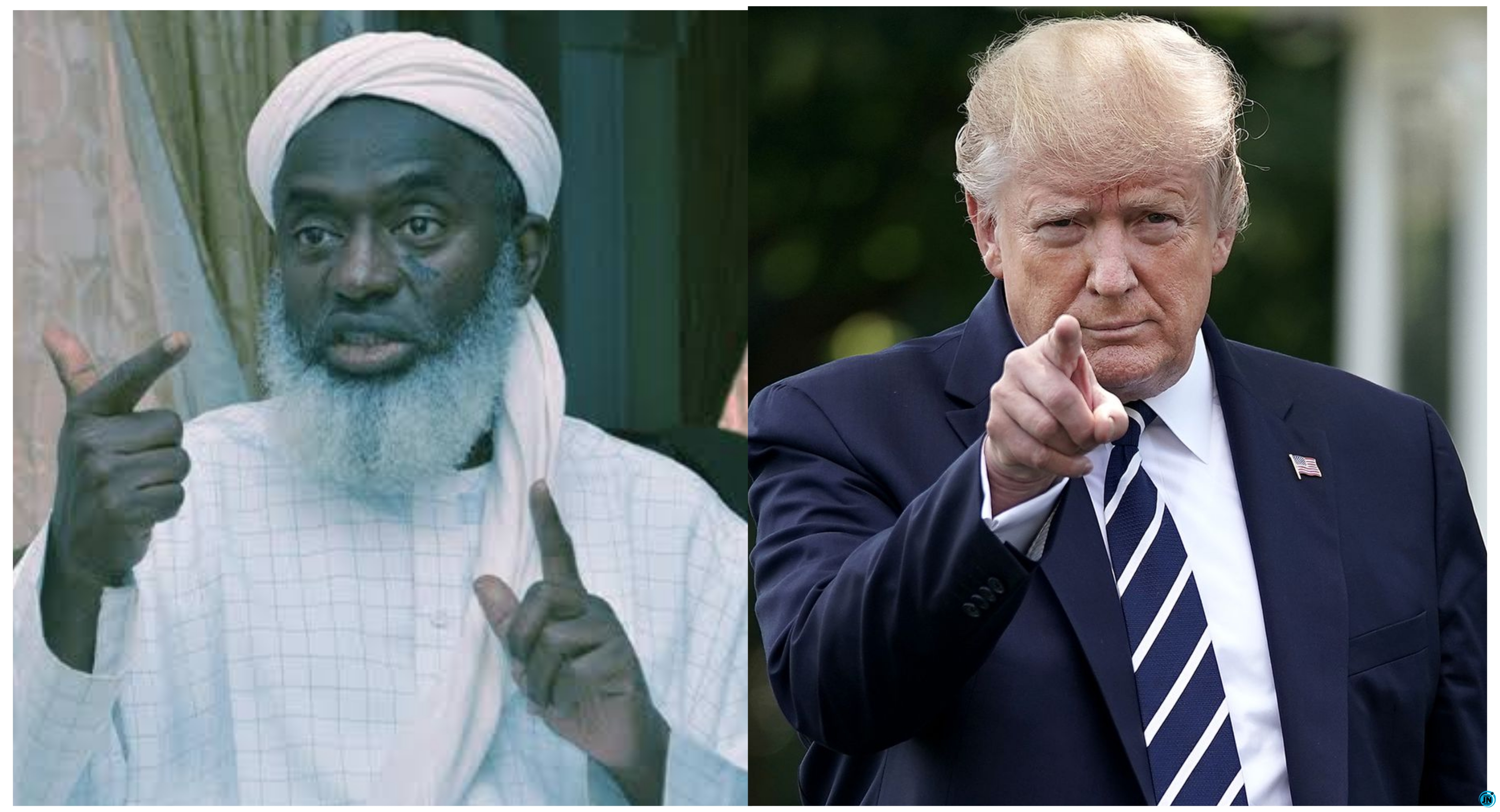
A controversial Islamic cleric, Sheikh Ahmad Gumi, has once again made headlines with his pointed criticism of the United States (US) government over its recent airstrikes in Nigeria. In a series of statements that have stirred debate online, Gumi urged foreign governments to prioritize investment in education, healthcare, and other basic amenities for herding communities, rather than spending exorbitantly on military operations and weapons. The cleric argued that such military interventions fail to address the root causes of insecurity and could further endanger local populations.
Gumi emphasized that ignorance remains one of the most pressing challenges facing herding communities, particularly among the Fulani, who rely heavily on pastoral livelihoods. “Bombing will not solve insecurity,” he stated, highlighting that lack of knowledge and awareness, coupled with socio-economic neglect, often exacerbate violence rather than prevent it. He stressed that providing access to education, vocational training, and basic infrastructure would yield far more sustainable solutions to insecurity in the region than military strikes.
Gumi reacts to viral missile footage
The cleric made these remarks in response to a viral video circulating on social media, which showed a Fulani man reportedly discovering a barrel believed to be from a missile fired by the US military in an open field. In the video, the man is seen handling the potentially dangerous object with little understanding of its lethal potential. Gumi expressed concern that such incidents demonstrate a widespread lack of awareness about the hazards posed by unexploded ordnance among local herders.
In a post shared on Facebook, Gumi warned that such negligence could easily result in loss of lives and serious injuries. “Most herdsmen need deliverance from ignorance and themselves, not bombardment,” he wrote, emphasizing that the long-term solution lies in education and awareness rather than the use of lethal force. He argued that repeated military strikes often leave civilians exposed to danger and fail to prevent the activities of extremist groups, who adapt quickly to such operations.
Education better than bombardment — Gumi
The cleric went further to highlight that the man in the video lacked both basic religious knowledge and safety awareness. “He doesn’t even understand the basic creed of Islam and the serious danger of unexploded bombs,” Gumi noted, stressing that religious education and practical knowledge about safety are crucial for community well-being. He added that he has consistently prioritized non-violent interventions, including building schools for herding communities and providing resources for education, health, and livelihood development.
Gumi lamented the contrast between the cost of a single military strike and the resources required to build schools and other essential facilities. “Instead of dropping a $2 million bomb, the same money could build schools and amenities for them,” he said, appealing for a more humane and long-term approach to resolving security challenges. He reiterated that investing in the education and welfare of vulnerable communities would not only reduce their susceptibility to extremist influence but also empower them to contribute positively to society.
US airstrikes in Sokoto
On Christmas Day, the United States military, acting on directives from former President Donald Trump, carried out airstrikes in parts of Sokoto State, Nigeria. The strikes targeted locations reportedly associated with ISIS and Lakurawa terrorist groups. However, reports suggest that the airstrikes largely missed their intended targets, raising questions about their effectiveness and the collateral risks posed to local communities.
The Nigerian government later confirmed the operation, describing it as a coordinated military mission conducted in collaboration with international partners. The government added that President Bola Tinubu had approved the action following detailed security assessments, emphasizing the need to curb terrorist activities in the northwestern region of the country. Despite this, Gumi and other critics argue that foreign military interventions alone cannot resolve the complex socio-economic and ideological factors driving violence in Nigeria, underscoring the urgent need for education and community development initiatives.
The debate sparked by Gumi’s comments has ignited discussions across social media platforms, with many Nigerians weighing in on the balance between military action and humanitarian investment in tackling insecurity and extremism in the country. His remarks have particularly resonated with advocates for education and local empowerment, who argue that lasting peace can only be achieved through sustained development rather than sporadic military interventions.[/p>