
A Nigerian man who was mistakenly credited with a staggering sum of N1.5 billion by First Bank has gone viral online after making a shocking choice to serve a 1-year jail term rather than refund the remaining money. The incident has captured the attention of social media users, sparking widespread discussions about accountability, ethics, and the legal consequences of financial misconduct in Nigeria.
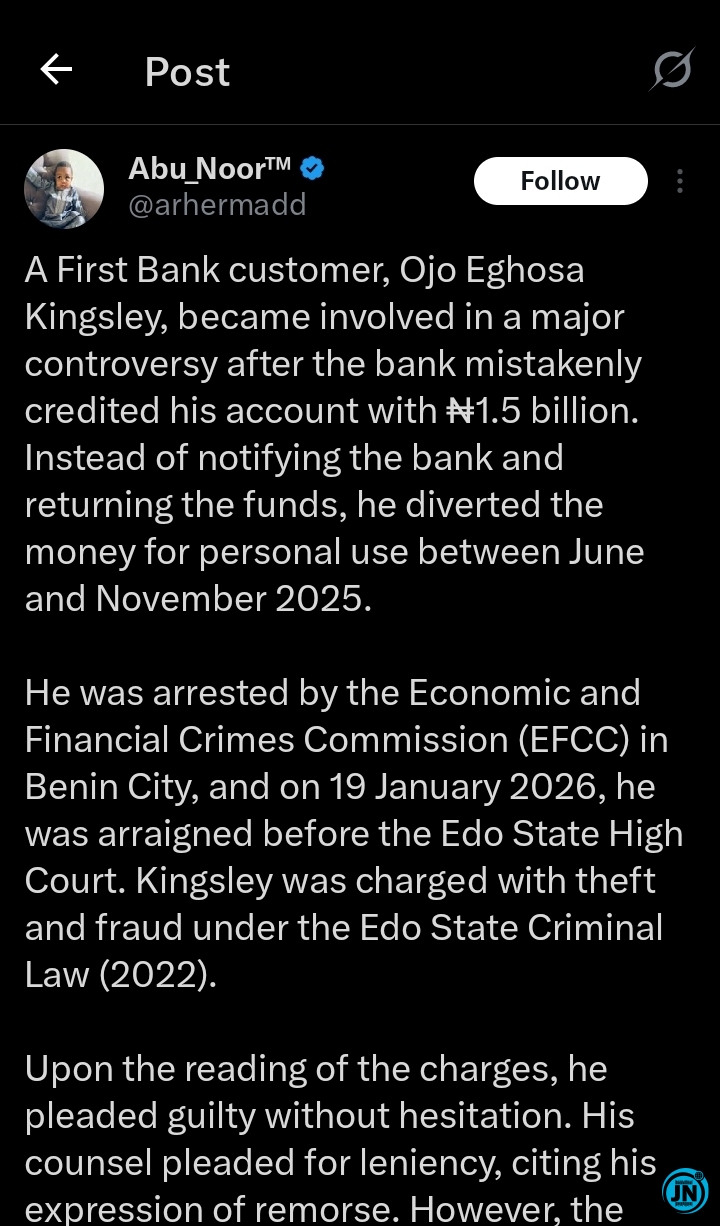
The story first gained traction after @arhermadd shared details of the case on X (formerly Twitter), providing context on how the situation unfolded and the decisions made by the man, identified as Ogo Ehosa Kingsley. According to the post, Kingsley allegedly diverted the mistakenly credited funds for personal use over several months, from June to November 2025, without notifying the bank of the error.
Man Opts For 1-Year Jail Term Over Refund
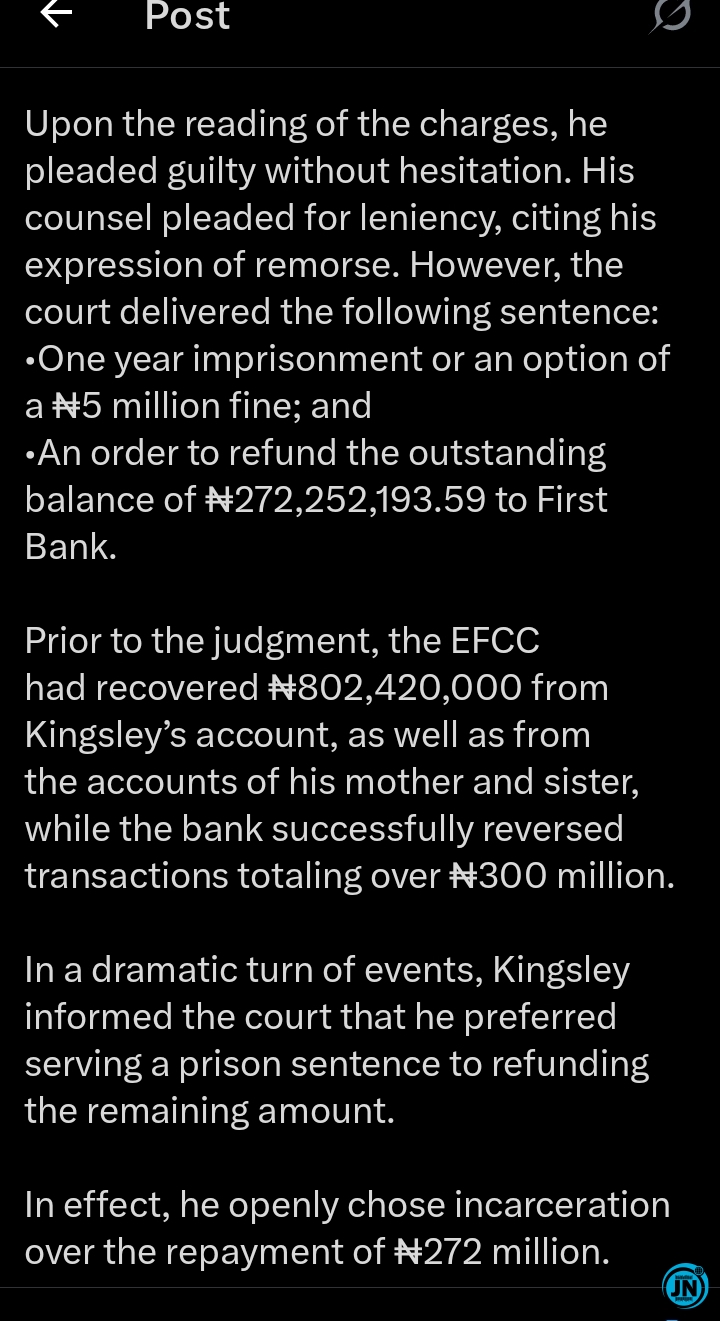
Following the irregular transactions, the Economic and Financial Crimes Commission (EFCC) stepped in and prosecuted Kingsley for theft and fraud on January 19, 2026. The case was brought before the Edo State High Court, where he faced charges under the Edo State Criminal Law (2022). During the trial, Kingsley pleaded guilty to the charges and was subsequently ordered to refund the outstanding balance of N272,252,193.59 to First Bank.
Prior to the judgment, EFCC had successfully recovered N802.42 million from Kingsley’s accounts as well as those of his mother and sister, while the bank managed to reverse additional transfers totaling over N300 million. Despite these recoveries, a substantial sum remained unpaid. In a dramatic twist, Kingsley informed the court that he would rather serve a 1-year prison sentence than repay the remaining N272 million, effectively choosing incarceration over financial restitution.
The case has since generated significant reactions online, with users debating the implications of Kingsley’s choice, the responsibilities of individuals in handling erroneously credited funds, and the broader legal precedents for similar situations in Nigeria. Some commentators criticized Kingsley for his decision, highlighting moral and ethical obligations, while others speculated on potential loopholes in the banking system that allowed such a situation to occur.
Social media users also noted the involvement of Kingsley’s family in the recovery process, questioning how much they were aware of the transactions and their role in the diversion of funds. Many highlighted the fact that, despite recovering a large portion of the erroneously credited funds, Kingsley still opted to accept a jail term, a decision described by many as “baffling” and “unprecedented.”
Sequence of Events
- June to November 2025: Kingsley allegedly diverts N1.5 billion mistakenly credited by First Bank for personal use.
January 19, 2026: EFCC prosecutes Kingsley for theft and fraud.
Prior to judgment: EFCC recovers N802.42 million from Kingsley, his mother, and sister. Bank reverses over N300 million in transactions.
Court judgment: Kingsley ordered to refund N272,252,193.59.
Kingsley opts for a 1-year prison sentence instead of repaying the remaining balance.
The dramatic choice by Kingsley has made the case a trending topic online, with many questioning how such a significant sum was mistakenly credited, the mechanisms banks have in place to prevent similar errors, and the consequences for individuals who mismanage or divert funds. It also raises discussions on the ethical responsibility of individuals to return funds not rightfully theirs, even when facing personal gain versus legal consequences.
See below images highlighting screenshots and social media reactions to the case:
This incident serves as a cautionary tale for both banking institutions and individuals, emphasizing the importance of transparency, due diligence, and accountability when handling financial errors, while also shining a spotlight on the consequences of diverting funds for personal use in Nigeria’s legal system.