
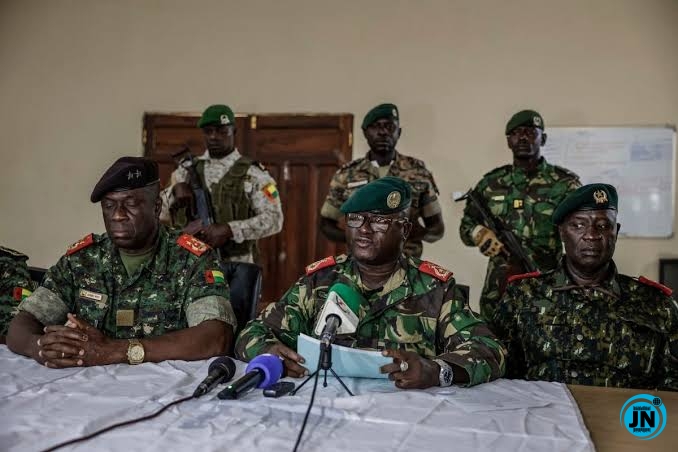
Military officers in Guinea-Bissau have seized control of the government, suspended the electoral process, and announced that they will oversee the country’s affairs until further notice.
The development has thrown the nation into political uncertainty after a disputed election outcome, with both incumbent President Umaro Embaló and his main challenger, Fernando Dias, separately declaring victory on Monday despite the lack of official results from the electoral commission.
Both political camps claimed to have crossed the required 50 percent mark needed to avoid a second-round election, intensifying tensions across the country and raising fears of unrest.
The situation quickly deteriorated as soldiers reportedly took strategic positions, sealed off key government facilities, and moved against senior officials in what has now been widely described as a military takeover.
The Economic Community of West African States (ECOWAS), in a statement released on Wednesday, warned that the election period in Guinea-Bissau had already been overshadowed by serious security, political, and institutional challenges even before the latest developments.
According to the regional body, the fragile atmosphere and accusations of electoral manipulation had created a volatile environment leading up to the military’s intervention.
Just days earlier, the government had claimed to have foiled an attempted coup, accusing Brigadier-General Daba Nawalna of masterminding a plot to overthrow the administration.
However, matters took a dramatic turn on Wednesday when Embaló told Jeune Afrique that he had been arrested inside the presidential palace around 1 p.m.
He further disclosed that other high-profile figures were also detained, including armed forces chief Biaguê Na Ntan, Interior Minister Botché Candé, and the deputy chief of staff Mamadu Ture.
The faction behind the takeover released a statement describing itself as the “High Military Command for the Restoration of National Security and Public Order.”
In the statement, the group claimed it acted to prevent what it described as a destabilisation plot allegedly involving local politicians and a well-known drug trafficker, as reported by Africa Report.
Although the soldiers reportedly did not employ violence during the arrests, Embaló has openly described the action as a coup against his government.
The electoral commission is still expected to announce the official presidential results on Thursday, though uncertainty now hangs over whether the process will proceed as planned under military control.
The unfolding situation has attracted international attention, with calls for calm and respect for democratic processes growing louder as Guinea-Bissau faces another critical chapter in its political history.