
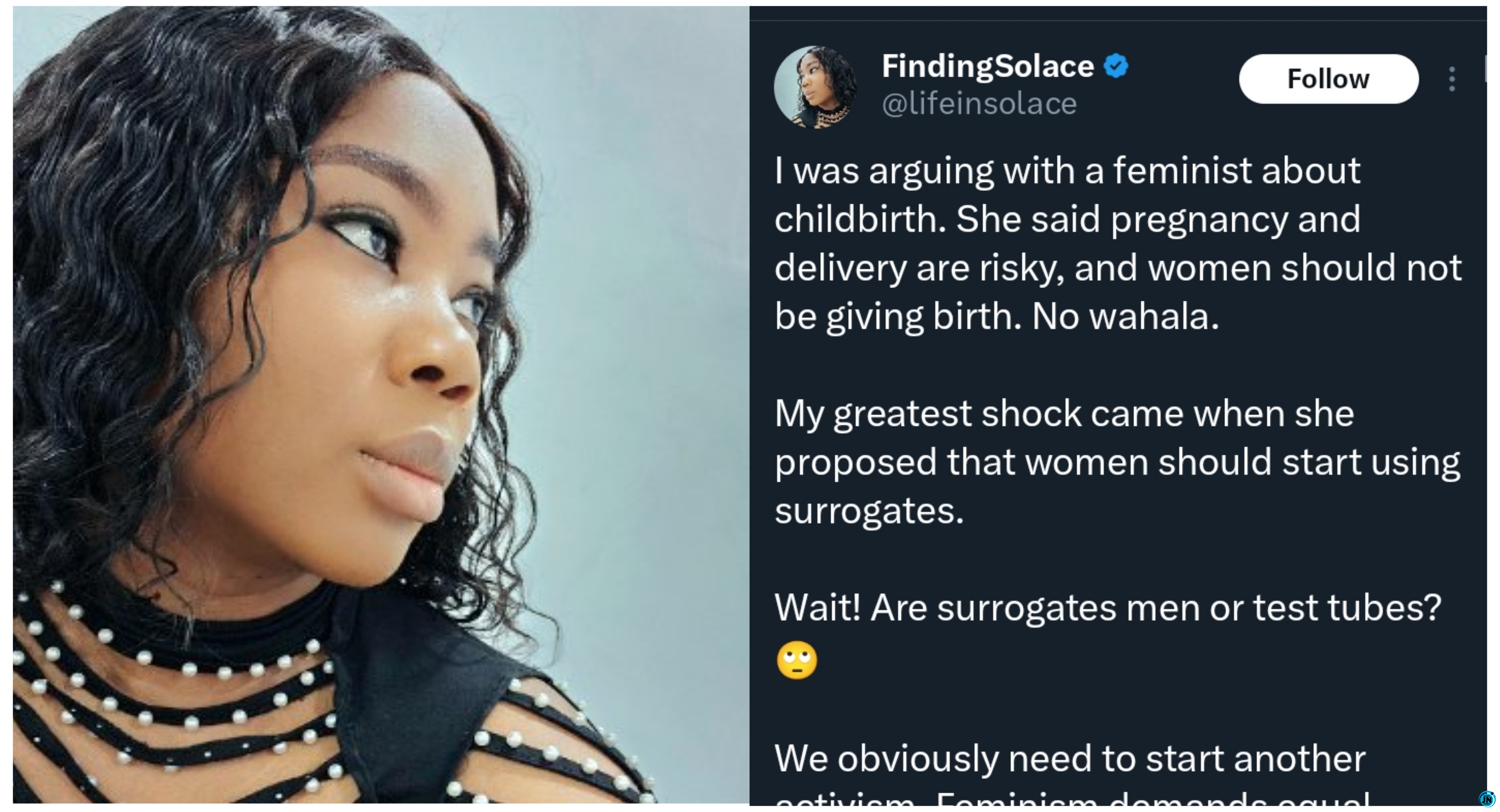
A post on X has sparked a heated debate after a user shared her conversation with a feminist who controversially argued that women should refrain from giving birth due to the significant risks associated with pregnancy and childbirth.
The discussion, shared by @FindingSolace, outlined the exchange in detail, revealing the surprising nature of the feminist’s viewpoint. According to the poster, the conversation began with a disagreement about childbirth and the potential dangers faced by women during pregnancy and delivery.
The feminist reportedly stated, “Pregnancy and delivery are risky, and women should not be giving birth.” This assertion alone generated strong reactions from the poster and online users alike, highlighting the controversial nature of suggesting that women avoid natural childbirth for safety reasons.
The discussion became even more contentious when the feminist proposed that women should start using surrogates as an alternative. The poster expressed disbelief at this idea, questioning the practical and ethical implications by asking, “Wait! Are surrogates men or test tubes?🙄” This response underscored the tension between advocating for safety and imposing risks onto others through surrogacy.
The poster further critiqued the perceived inconsistency in the feminist stance, noting that while the idea of avoiding childbirth aims to prevent harm, it simultaneously shifts the danger to another woman. They argued, “You don’t want to die giving birth, but you want to subject another woman to that fate.” This statement resonated with many users, prompting a broader discussion about the responsibilities and ethics surrounding surrogacy and reproductive choices.
Social media reactions
YourSoftIgboGirl commented: “Surrogates are paid for their services. They understand the risks and if they want to go ahead and get paid for it, it’s their decision to make. My issue is that it should be regulated so that people who do it get properly compensated and not taken advantage of because of poverty.” This comment highlighted concerns over exploitation and the need for regulation in the surrogacy industry.
Mr Man stated: “Feminists just want the same perks men have without putting in the work. If given the opportunity they will do the same thing they criticise men of doing.” His comment reflected a common critique online regarding perceived hypocrisy among some feminist circles.
Prosthetist added: “Majority of Nigerian feminists became who they are because no man wants them. They don’t even understand what they are preaching.” This remark further fueled debate over the motivations behind certain feminist arguments and their relevance to broader social issues.
James concluded: “Most feminists I have seen are the dumbest set of people in the world confusing feminism with hate.” His comment illustrated the polarized opinions circulating on social media regarding feminism and its messaging in Nigeria.
The X thread has since become a focal point for online discourse, with discussions ranging from the ethics of surrogacy to the perceived risks of childbirth and the responsibilities of women in society. The post highlights how controversial statements can rapidly ignite debates on social platforms, drawing a mix of criticism, support, and humor from the online community.