
A Nigerian man has sparked widespread conversation online after publicly calling out his barber for introducing a 7.5% Value Added Tax (VAT) charge on customers’ bills, a move that many Nigerians found surprising and controversial.
According to a notice that has since gone viral on social media, the barber informed customers that beginning from January 1, 2026, a 7.5% VAT would be added to every service payment made at the shop, including regular haircuts and grooming services.
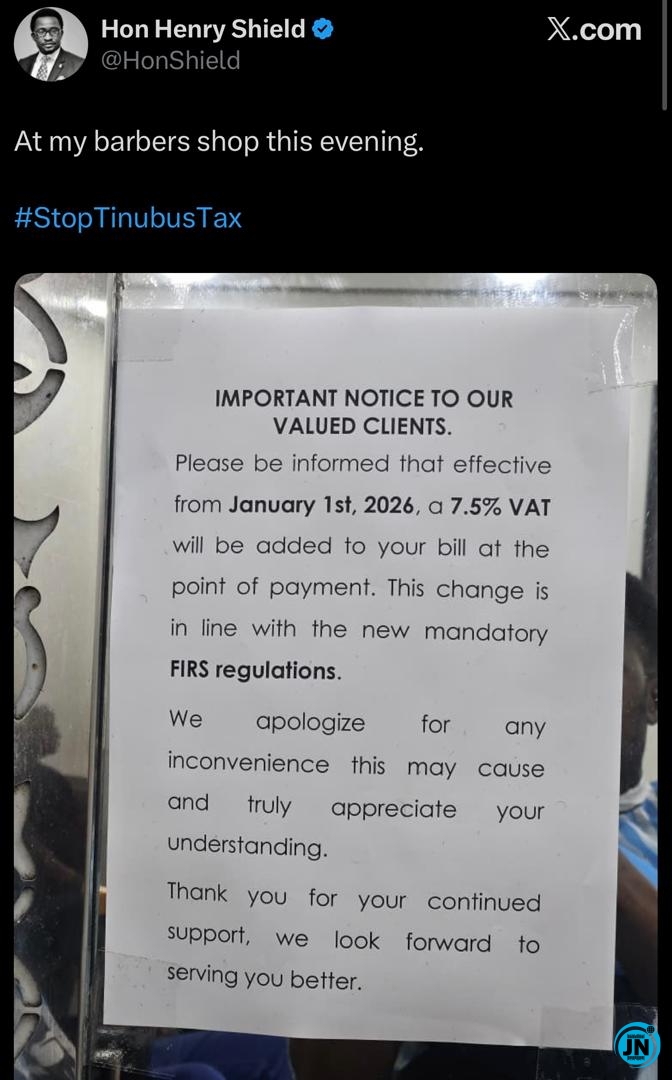
In the notice, the barber explained that the decision was taken in strict compliance with new mandatory regulations by the Federal Inland Revenue Service (FIRS), stressing that the business had no option but to adhere to federal tax requirements.
The development comes amid the federal government’s enforcement of tax policies expected to take effect this year, as authorities intensify efforts to expand the tax net and improve revenue generation across different sectors of the economy.
The barber further apologised to customers for any inconvenience the additional charge might cause, thanking them for their understanding and continued patronage, while assuring them of improved service delivery going forward.
However, the announcement did not sit well with many internet users, who questioned when small businesses such as neighbourhood barbing salons began charging VAT like large corporations and registered enterprises.
Some critics argued that VAT should not apply to informal or small-scale businesses, while others insisted that the move reflects the growing pressure on small business owners to comply with tax regulations regardless of their size.
Reactions quickly flooded social media platforms, with Nigerians expressing a mix of disbelief, frustration, and humour over the situation.
One commentator wrote, “So after a ₦5k haircut, I’ll now pay VAT? Nigeria is not a real place.”
Another user added, “Small businesses are just trying to survive. If FIRS dey disturb them, what do you expect?”
Others defended the barber, noting that business owners are often caught between customer backlash and government enforcement, making compliance unavoidable even when it appears excessive.
The incident has since reignited broader conversations around taxation, the cost of living, and the impact of government policies on everyday Nigerians, especially those operating or patronising small businesses.
Whether it is strict compliance or unnecessary overreach, one thing is clear, even a simple haircut is no longer safe from VAT conversations in Nigeria.