
Ruben Amorim, the recently appointed head of Manchester United, has openly challenged the club’s hierarchy following a 1-1 Premier League draw away at Leeds United, insisting that he must be allowed to exercise full authority as the club’s manager without interference from senior executives or backroom staff.
During his post-match media conference, Amorim expressed his growing frustration with what he described as excessive involvement from senior figures behind the scenes. He emphasized that his responsibilities extend far beyond simply coaching the team on the pitch, pointing out that a manager’s remit includes overseeing all aspects of football operations, from tactical planning to player recruitment.
The Portuguese tactician also referred to the fixed nature of his contract, which runs for 18 months, as a signal that he will insist on operational independence for the duration of his tenure. “I came here to be the manager, not to be the coach,” Amorim said emphatically. “In every department, the scouting department, the sporting director, they need to do their job. I will do mine for 18 months and then we move on.”
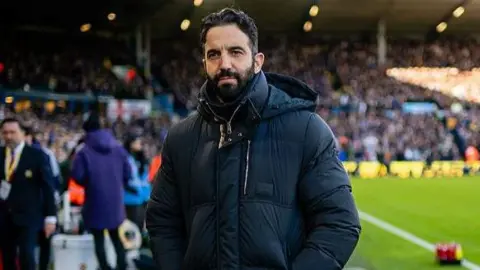
Amorim stressed that the managerial authority he demands was part of the initial agreement when he joined Manchester United as Erik ten Hag’s successor in November 2024. Despite being officially announced as head coach, he insisted that his role should reflect the responsibilities of a modern top-level manager, akin to the autonomy granted to prominent figures in European football. “I know that my name is not Tuchel, it’s not Conte, it’s not Mourinho, but I’m the manager of Manchester United. And it’s going to be like this for 18 months or when the board decides to change,” he said, underscoring his determination to establish clear lines of authority within the club’s structure.
Reports in recent months have suggested friction over recruitment and tactical decisions, particularly involving United’s recruitment head Christopher Vivell and director of football Jason Wilcox. Amorim acknowledged that differences of opinion regarding transfer targets and playing systems are part of the challenge of aligning all parties within the club, adding, “Sometimes I have one idea, Jason and the board have another idea, [but] every decision we make we need to reach a common ground.”
The manager’s candid remarks also highlighted his perception that Manchester United has become overly sensitive to external scrutiny and public criticism. Referencing former United defender Gary Neville, he noted, “If people cannot handle the Gary Nevilles and the criticisms of everything, we need to change the club,” suggesting that resilience and internal alignment are essential for the team’s success at the highest level.
Manchester United’s recent form has been mixed, with the team winning just one of their last five matches, although their league position remains broadly in line with the club’s target of European qualification. Amorim emphasized that progress is being made on the field, but his statements have raised questions about cohesion and clarity at the executive level, and whether the manager’s authority is fully respected within the club hierarchy.
After making his points at Elland Road, Amorim abruptly left the media room without expanding further, leaving journalists and fans anticipating more clarity in his next press conference. He is next scheduled to speak to the media on Tuesday ahead of Manchester United’s upcoming trip to Burnley, where further explanation and potentially additional insights into his position and expectations are expected.