
United States federal lawmaker Riley Moore has called for urgent action to secure the release of Sunday Jackson, a Nigerian national sentenced to death by hanging after being found guilty of culpable homicide for killing an armed herdsman who allegedly attacked him while he was tending to his farm. The case has drawn significant attention due to the circumstances surrounding the confrontation and the severity of the punishment under Nigerian law.
In an interview with Fox News, Mr Moore revealed that there were positive developments during a recent meeting between U.S. officials and a Nigerian delegation led by National Security Adviser Nuhu Ribadu. He emphasized that the discussions had opened a potential path for increased collaboration between the two nations on security and anti-terrorism efforts, contingent upon certain steps being taken by Nigerian authorities.
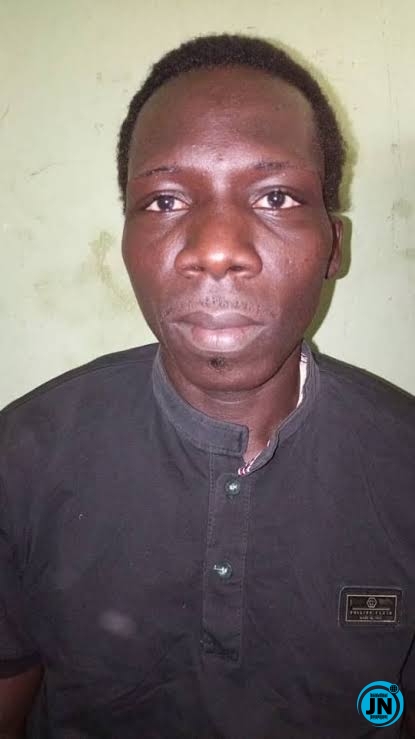
“The meeting with the Nigerian delegation was productive, and it sounded like they’re open to partnering with the United States to stop these killings. I think we did make some progress,” Mr Moore said. He added that the release of Sunday Jackson would serve as a significant first step in demonstrating Nigeria’s commitment to cooperation. “But there’s a lot of things they can do, and one of the first steps is releasing Sunday Jackson, and another one is working with us to disarm these militants in the middle-belt of the country—the Fulani Islamic radicals that are there,” he stressed.
Background on Jackson’s Case
Mr Jackson was arrested by Nigerian police and prosecuted for culpable homicide at the Yola High Court in Adamawa State. The offence, punishable by death under Section 211 of the northern Nigerian penal code, stems from an incident where Jackson killed a herdsman who allegedly attacked him on his farmland. During court proceedings, Jackson admitted to the death of the herdsman but maintained that he acted in self-defense, arguing that he had no criminal intent and had only responded to a threat to his life.
The prosecution urged trial judge Fatima Ahmed Tafida to convict Jackson based on his admission, while the defence contended that the killing occurred in self-defence, insisting that Jackson had been the victim of an unprovoked attack. In February 2021, the judge ruled that Jackson’s actions warranted a death sentence by hanging, dismissing the self-defence claim on the grounds that he could have escaped the confrontation after overpowering the attacker. The decision has sparked widespread debate regarding the fairness and implications of the ruling.
Criticism and Legal Repercussions
Jackson’s conviction has faced criticism from numerous lawyers, human rights activists, and international observers, who argue that the judgment sets a dangerous precedent for future cases in Nigeria, particularly regarding self-defence claims. Advocates for Jackson have emphasized that the ruling may discourage citizens from defending themselves in life-threatening situations, fearing legal consequences.
Currently, Jackson remains on death row, with his only legal recourse being a state pardon from the Adamawa State governor, issued through the state’s attorney general. Activists and U.S. officials, including Mr Moore, have urged swift action to ensure that justice is served while maintaining human rights protections.
Broader Security Concerns
In the same interview, Mr Moore also addressed ongoing security challenges in northern Nigeria, condemning the recent abduction of schoolgirls and teachers. He highlighted the threat posed by radical Fulani militants in the Middle Belt region, calling on the Nigerian government to implement measures to disarm and dismantle these groups. “These kidnappings and killings are unacceptable, and the government must act decisively to restore safety for all Nigerians,” he said, emphasizing that coordinated efforts with the United States could be instrumental in curbing such violent activities.
The case of Sunday Jackson remains a focal point in discussions on human rights, justice, and international cooperation, with U.S. authorities pressing for both his release and a broader strategy to address militant violence in Nigeria. The situation underscores the need for balanced approaches to law enforcement, security, and the protection of citizens in conflict-prone regions.