
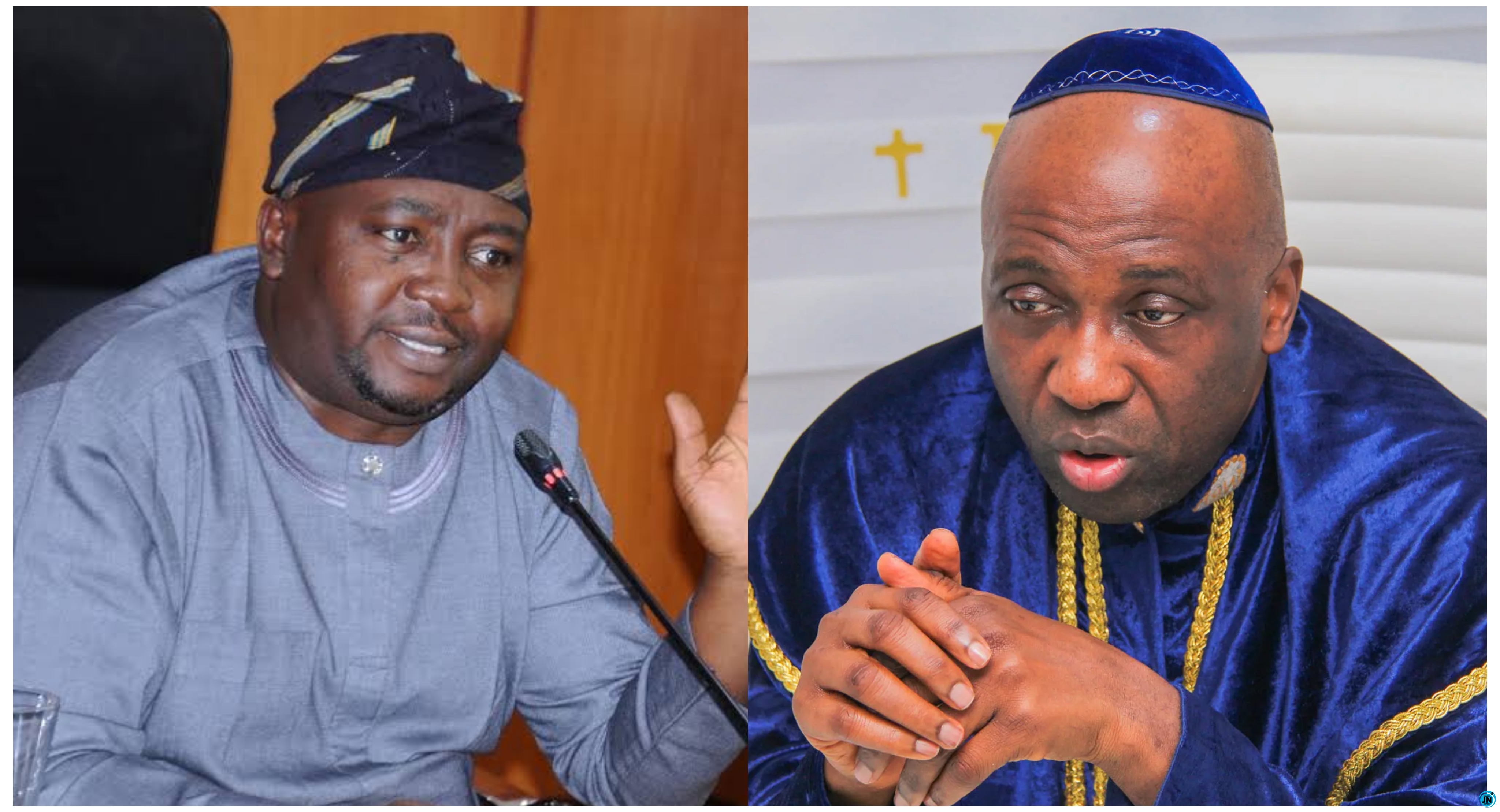
Nigeria’s Minister of Power, Bayo Adelabu, has formally petitioned the Department of State Services (DSS), alleging that Primate Elijah Ayodele, the founder of INRI Evangelical Spiritual Church, attempted to extort N150 million from him. According to the minister, the request was made under the pretext of providing “spiritual support” for his 2027 governorship ambition in Oyo State.
Adelabu, who previously contested for the Oyo governorship, claims that Primate Ayodele demanded not only cash but also expensive ritual items in exchange for supposed divine intervention that would secure his electoral victory. The petition, dated 13 October 2025 and signed by Adelabu’s aide, Bolaji Tunji, alleges that the cleric became hostile after the minister refused to comply with his demands.
Alleged Expensive Spiritual Demands
The petition details that Primate Ayodele instructed Adelabu to provide 24 APC flags along with 1,000 saxophones or trumpets. Correspondence seen by TheCable reportedly shows that the value of these items ranged from N50 million for locally made Nigerian-grade instruments to N130 million for imported Chinese grade-one instruments. The minister claims the deadline for delivering these items was initially set for 1 April but was later extended to 4 April.
Primate Ayodele allegedly told Adelabu that these requests were “instructions from God” and insisted that he perform prayers, vigils, and specific rituals that would guarantee his victory in the Oyo governorship race. Adelabu reportedly told the cleric that he was unable to afford the items and could not comply with the demands, prompting tension between the two parties.
Public Prophecies and Legal Threats
Following Adelabu’s refusal, the cleric is said to have publicly declared during a church service that the minister would not become Oyo governor. The statement was framed as a divine warning and reportedly included an invitation for Adelabu to challenge him legally. The petition describes the cleric’s actions as a form of spiritual blackmail, aimed at influencing the political process through financial extortion and ritual coercion, raising concerns about the intersection of religious authority and political ambitions in Nigeria.
The minister’s complaint has reignited debates about the role of spiritual leaders in politics and the ethics of soliciting money or material contributions in exchange for purportedly supernatural support in political campaigns. It also raises questions about accountability and the need for regulatory oversight when religious figures become involved in political maneuverings, especially when financial and ritual pressures are applied to aspiring politicians.
Adelabu’s petition to the DSS underscores the challenges faced by political candidates navigating spiritual influences while trying to maintain ethical and legal standards, highlighting the tension between faith, politics, and governance in contemporary Nigeria.