
A photograph purporting to show President Bola Tinubu meeting with Rwandan President Paul Kagame has ignited widespread discussion and controversy on social media, after users noticed a prominent Grok watermark on the image, prompting questions about its authenticity.
The image, reportedly captured during a lunch meeting in Paris on Sunday, was initially shared on President Tinubu’s official X account and later reposted by his special aide, Dada Olusegun, intensifying scrutiny from online observers.
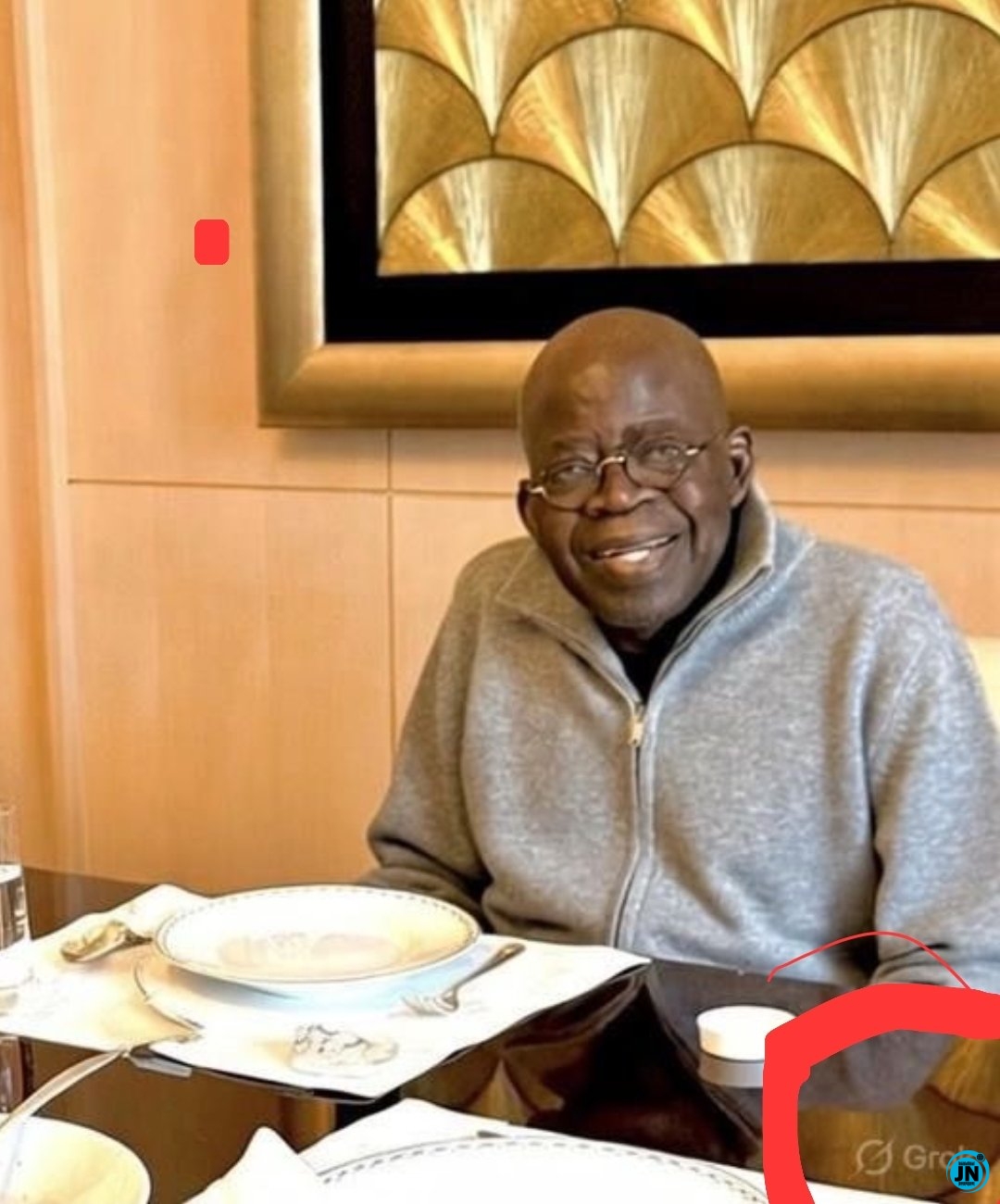
Grok Watermark Sparks Speculation
Several social media users quickly noticed the visible Grok watermark on the photograph, raising suspicions that the image may have been generated using artificial intelligence rather than being an authentic photograph from the official presidential meeting.
Grok, developed by Elon Musk’s xAI company, is a generative AI tool capable of creating, enhancing, and manipulating images, which further fueled speculation about the photograph’s origin.
The fact that Dada Olusegun, President Tinubu’s special assistant on new media, also shared the same image contributed to the intensity of public scrutiny, with many Nigerians questioning the decision to circulate what some perceived as an AI-generated representation of an official event.
“Mr Dada Olusegun why are you using Grok to generate a picture of what was supposed to have happened? Is it incompetence or you are trying to tell us something?” one X user asked, reflecting the skepticism and criticism from members of the public.
Official Clarification from the Presidency
In response to the mounting debate, sources within the Presidency clarified to news reporters that the photograph was not fully generated by Grok. Instead, the original low-quality photo taken during the lunch meeting had been enhanced using Grok’s image-enhancement feature to improve clarity and resolution.
According to these sources, no elements were artificially added or manipulated; the AI tool was used solely for technical enhancement purposes, preserving the authenticity of the original moment captured between the two heads of state.
President Tinubu had traveled from Lagos to Europe on December 28 as part of his end-of-year holiday and official visits, during which he reportedly met with President Kagame for discussions on bilateral relations.
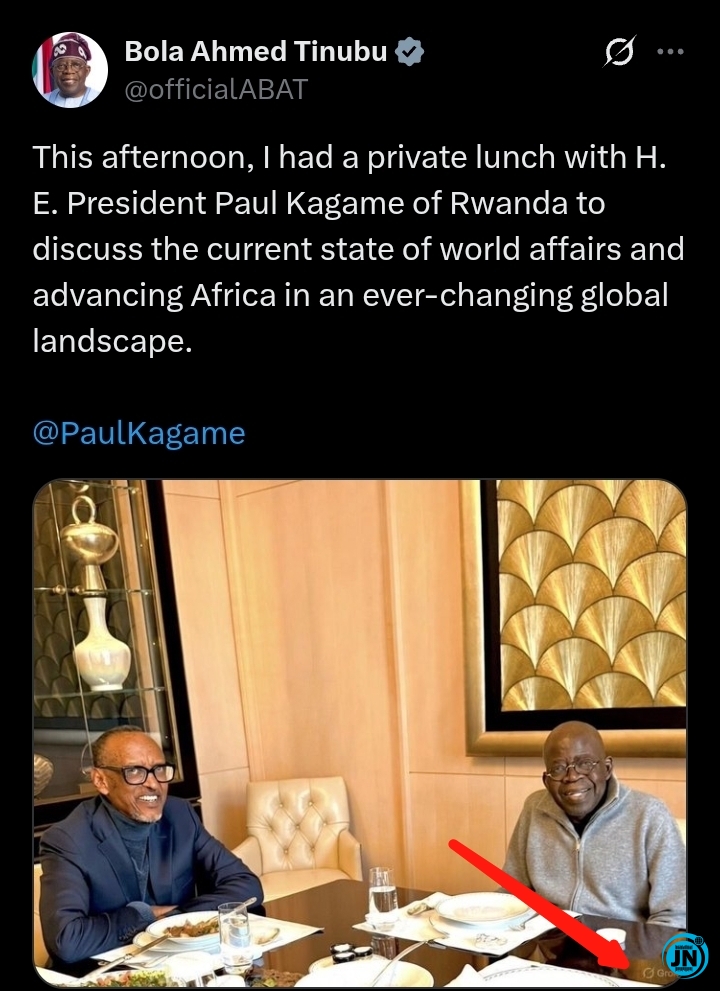
Public Reactions Continue to Grow
Despite the official clarification, the conversation around the image has continued to escalate online, with many Nigerians expressing outrage, disbelief, and satire regarding the use of AI in a purportedly official context.
Biafra lobby member, Elias Gerasoulis, tweeted: “There is a notification at the end of the tweet by @officialABAT from Grok that this photo of President Tinubu and President Kagame is likely AI produced. It would typically be shocking that a head of state would be issuing forged photos, but that should not be a surprise with Tinubu. He is able to forge this photo the same way he allegedly forges his diploma, and plans to forge the 2027 elections in Nigeria.”
Ademola expressed frustration, writing: “AI generated image ???? what is even real in this administration at this point … cos if handler can’t even know you cannot use an AI generated image for a presidential official presentation like this … omo smh!”
Deechairman mocked the situation: “Breeze don blow we don see the fowl’s nyash , a whole president using AI picture. This man no just rate us at all.”
Necherem added: “Who authorized this embarrassing post? Must we lie about everything?”
Diplomat questioned the image’s authenticity, stating: “I was informed by my brother, @sadiqGsadiq, that this image might be AI-generated. Considering how easy it is to manipulate images today, including adding someone to the empty chair in between you people, can you prove that this image is genuine and the news isn’t false?”
The controversy has continued to trend on X, highlighting ongoing debates in Nigeria about transparency, authenticity of official communications, and the emerging challenges posed by AI in public media and governance.