
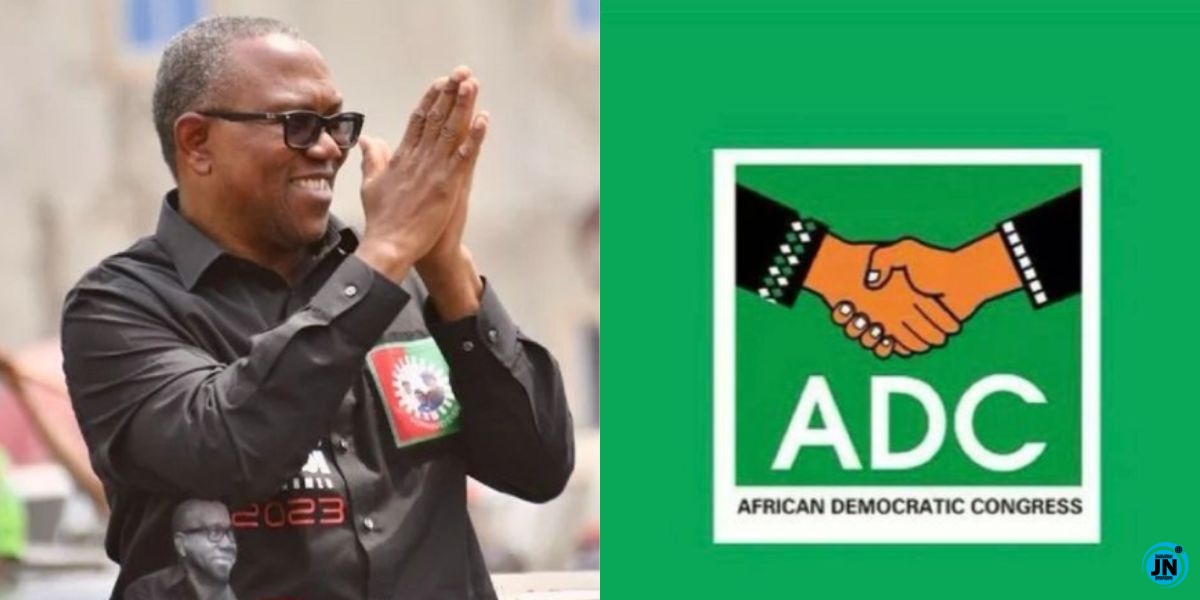
Peter Obi, former Governor of Anambra State and the Labour Party’s presidential candidate in the 2023 election, has officially defected to the African Democratic Congress (ADC), in a move that is expected to reshape Nigeria’s opposition landscape ahead of the 2027 general elections.
The defection announcement was made on Wednesday during a well-attended political gathering at the Nike Lake Resort. Addressing supporters, political associates, and opposition leaders from across the country, Obi framed his decision as a patriotic act aimed at uniting Nigeria’s fragmented opposition under a broad national coalition focused on addressing poverty, insecurity, and the perceived decline in democratic governance.
According to Obi, the decision to leave the Labour Party was not motivated by personal gain or political expediency, but by a commitment to the national interest and the urgent need to rescue the country from its worsening socio-economic and political challenges.
He called on members of the Obidient Movement, his political associates, and opposition figures nationwide to rally around the ADC platform, urging them to set aside partisan divides and work together for the good of the nation.
“This decision is guided solely by patriotism and national interest. I respectfully call on my political associates, the Obidient Movement, and opposition leaders nationwide to join this broad national coalition under the African Democratic Congress. History will not forgive silence in moments of national peril,” Obi said, stressing that the country cannot continue with politics rooted in self-interest and division.
Positioning his defection as a national mission, Obi warned that Nigeria had reached a critical juncture in its history and that decisive leadership and unity were imperative to prevent further deterioration of the country’s political, economic, and social systems.
“As the year 2025 ends today, we stand on the threshold of a new beginning. For Nigeria, moments of profound national challenge demand clarity of purpose and decisive action. That moment is now,” he added, highlighting the urgency of collective action to address the country’s pressing issues.
Obi painted a stark picture of Nigeria’s current state, pointing to the alarming statistics of poverty, unemployment, and insecurity that continue to affect millions of Nigerians. He cited that over 130 million citizens live in multidimensional poverty and more than 80 million youths are unemployed, calling it a “persistent agony” that is inconsistent with the nation’s potential and divine destiny.
“With over 130 million Nigerians living in multidimensional poverty and more than 80 million youths unemployed, our people are in persistent agony. This is not the destiny God bequeathed to over 220 million Nigerians,” Obi emphasized, underscoring the need for urgent national reform and inclusive governance.
Peter Obi’s defection to the ADC is widely seen as a strategic recalibration in Nigeria’s opposition politics, signaling his intent to build a credible, united alternative to the ruling party. Political analysts suggest that this move could consolidate opposition forces, attract undecided political actors, and energize voters ahead of the 2027 elections.
The announcement also included a renewed call for national dialogue and collaboration among opposition leaders, as Obi positioned himself and the ADC as a platform capable of championing good governance, transparency, and accountability. His speech indicated that the defection is not merely a party switch but a larger mission to mobilize Nigerians and opposition groups for a coordinated effort to rescue the nation from socio-economic and political decline.
In summary, Obi’s move to the ADC reflects both a personal and political commitment to addressing Nigeria’s multi-dimensional crises. By leveraging his political experience, nationwide support base, and public credibility, he aims to provide leadership that can unify the opposition and offer a viable alternative to the electorate in the next general elections, while addressing the urgent needs of millions of Nigerians currently facing economic hardship and insecurity.