
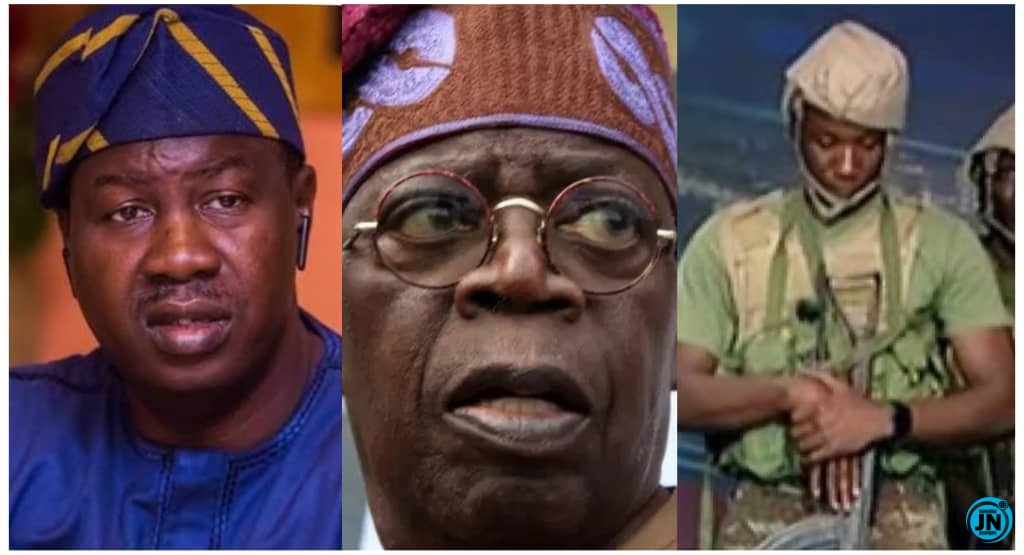
A former Lagos State governorship candidate and outspoken political commentator, Babatunde Gbadamosi, has strongly criticised the decision of President Bola Ahmed Tinubu to authorise the deployment of Nigerian military assets to the Benin Republic following the recent failed coup attempt in the country.
Gbadamosi warned that the move could create a dangerous precedent and potentially expose Nigeria to similar forms of foreign military intervention in its own internal affairs in the future.
The political commentator made his concerns known in a post shared on X (formerly Twitter) on Monday, shortly after Nigerian authorities confirmed the deployment of fighter jets and ground troops to support President Patrice Talon following the 7 December 2025 coup attempt in Cotonou.
According to reports, Nigeria acted in response to a formal request from the Beninese government, citing regional security cooperation and the need to restore stability.
Gbadamosi Questions Policy Consistency
In his post, Gbadamosi raised serious concerns about the broader implications of Nigeria’s action, questioning whether the government had fully considered the long-term consequences of its decision.
He wrote: “By rushing to bomb your smaller neighbour over their internal matter, do you not realise that you have unwittingly made it legal for a bigger nation to likewise bomb you for matters internal to you?”
He argued that although the Beninese authorities officially requested Nigeria’s military assistance, the decision still appears inconsistent with Nigeria’s longstanding position of rejecting external interference in its domestic affairs.
According to Gbadamosi, such an intervention weakens Nigeria’s moral and diplomatic authority when it comes to resisting foreign involvement in its own internal security challenges.
He further warned that this perceived contradiction could embolden more powerful nations to justify similar interventions against Nigeria under the guise of international support or regional stability.
Nigerians React as Debate Widens
Gbadamosi’s remarks quickly gained traction online, sparking widespread debate among Nigerians and attracting thousands of reactions, comments, and reposts across social media platforms.
Many Nigerians questioned the timing and priority of the intervention, pointing out the persistent internal security crises facing the country.
Several users referenced the ongoing threats posed by Boko Haram, ISWAP, ISIS, and other extremist groups that continue to operate in parts of the North-East, arguing that scarce military resources should first be focused on resolving domestic challenges.
Others debated whether Nigeria’s role as a regional power justifies such interventions, or whether it risks overextending the country’s military and diplomatic capacity.
Experts Warn of Sovereignty Risks
Security analysts and foreign policy experts say the growing debate highlights the delicate balance Nigeria must maintain between promoting regional stability and safeguarding its own sovereignty.
They note that while regional military cooperation can be crucial for preventing instability from spilling across borders, it must be guided by clear policies and strategic foresight.
Experts caution that actions taken today in neighbouring countries could shape how Nigeria is treated on the international stage in moments of internal crisis.
As discussions continue, the development has reignited broader conversations about Nigeria’s role in West Africa, its military commitments abroad, and the need for consistency in defending national sovereignty.