
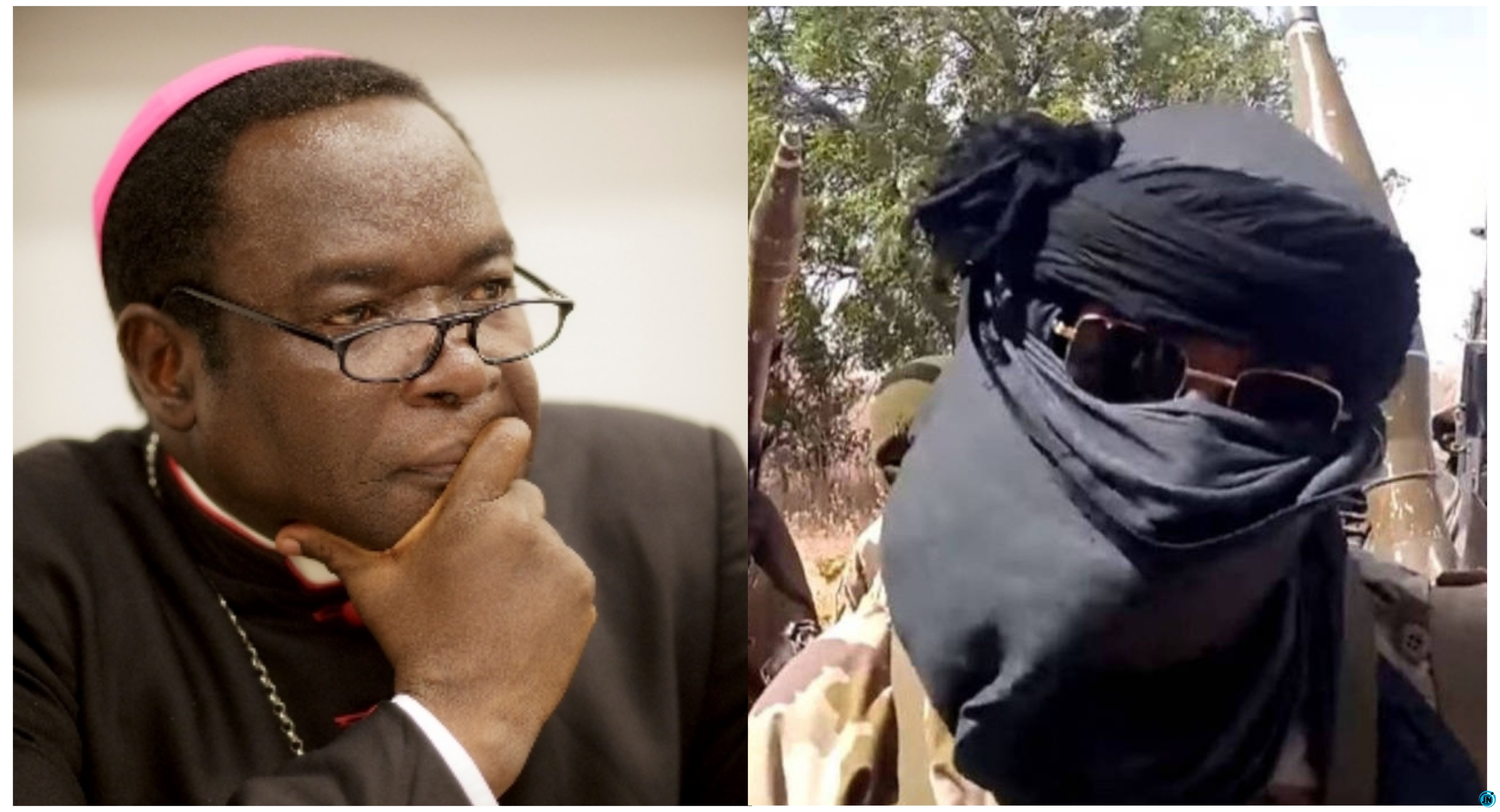
The Catholic Bishop of Sokoto Diocese, Most Rev. Matthew Hassan Kukah, has once again sparked nationwide discussion with his annual Christmas message, in which he highlighted the deep social failures that underpin Nigeria’s persistent insecurity challenges. His message, delivered on the occasion of Christmas 2025, drew attention to the link between moral neglect, poor governance, and the rise of violence in many communities across the country.
In his message, the bishop emphasized that bandits, kidnappers, and extremists are not strangers to society but products of the very environment that nurtured them. He described these individuals as the children of a society that has failed to provide adequate education, moral guidance, and opportunity, asserting that their emergence is a reflection of systemic neglect and societal dysfunction rather than random criminality.
Society Created the Crisis
Delivering his reflection titled “Joy and Hope in a Time of Tribulation,” Kukah stressed that the roots of insecurity lie in decades of weak leadership, poor governance, and societal indifference to the welfare of children. He argued that the individuals now terrorizing communities did not appear out of nowhere, but are products of broken homes, inadequate education, and a society that has failed to instill values and discipline.
He said, “Whether we call them bandits, kidnappers, or extremists, they are our children. They came out of our own loins. Our children are our future.” He urged Nigerians to reflect on their responsibilities in shaping a society that fosters peace, opportunity, and moral uprightness for all citizens.
Hope Amid National Trials
Kukah’s Christmas message came at a time when Nigeria continues to grapple with a series of trials, including widespread insecurity, economic hardship, and social unrest. He pointed out that many communities live under the constant shadow of fear due to killings, abductions, and other forms of violence, particularly in northern regions of the country.
Despite these challenges, the bishop reminded Christians that the birth of Christ symbolizes hope and light amid darkness. He emphasized that Nigeria’s current insecurity stems largely from systemic poverty, widespread illiteracy, and moral decay, and that without addressing these root causes, the country risks sliding further into chaos.
Kukah called for urgent investments in education, moral reform, and social programs to rehabilitate the nation’s children and strengthen communities. “We must either renovate, educate or perish,” he stressed, noting that proactive engagement is critical to national recovery and security.
Children as the Biggest Victims
A major theme in Kukah’s message was the plight of children, who he described as the most vulnerable in Nigeria’s broken system. He highlighted the alarming rates of child abduction, abuse, forced labor, and early marriage, citing notorious school kidnappings in Chibok, Dapchi, Maga, and Papiri. According to the bishop, nearly 2,000 children have been directly affected by such incidents in Nigeria alone, while similar tragedies continue to unfold globally, including in conflict zones like Gaza and Sudan.
He warned that the neglect and exploitation of children not only undermines social cohesion but also fuels the cycle of violence, producing future generations prone to extremism and criminality.
Rejecting Violence and Revenge
In his address, Kukah called on Christians to reject armed retaliation and vengeance in response to persecution or violence. He urged faith, prayer, and moral resilience as the true instruments for overcoming adversity. Drawing on scripture, he reminded congregants of Jesus’ admonition to Peter to “put away your sword,” emphasizing that violence cannot defeat violence, and that Christianity has survived oppression through endurance, moral fortitude, and compassionate action rather than through force or aggression.
Call to Leaders and Citizens
The bishop directly challenged Nigerian leaders to demonstrate responsibility and accountability in the face of national crises. He urged those in positions of authority to ensure that national resources are used for the common good, addressing insecurity, poverty, and mismanagement transparently and effectively. He stressed that confronting these issues honestly is essential for restoring trust, stability, and hope across the country.
Kukah also appealed to Nigerian citizens to maintain hope despite the grim realities, reminding them of the spiritual significance of Christ’s birth: “By the birth of Christ, Emmanuel—God is with us.” He described Christmas light as “a light that darkness cannot overcome,” urging communities to come together in solidarity and reject hatred, division, and sectarianism. “We have buried our dead together. We have mourned together. We must hold together in darkness so we can welcome the light together,” he said.
Closing Reflections
The bishop acknowledged the efforts of government and security agencies in rescuing abducted children, describing repeated school kidnappings as “one ordeal too many” that demand urgent attention and reform. He urged Christians and all citizens to embody the teachings of Christ in their daily lives, emphasizing that Christmas is not merely a calendar date or festive occasion, but a vocation to spread love, peace, and reconciliation through concrete actions.
In conclusion, Kukah wished Nigerians a joyful Christmas, encouraging them to remain hopeful and united in the pursuit of a just, peaceful, and morally upright society, reminding them that the lessons of Christmas extend beyond celebration to practical engagement in social and moral renewal.