
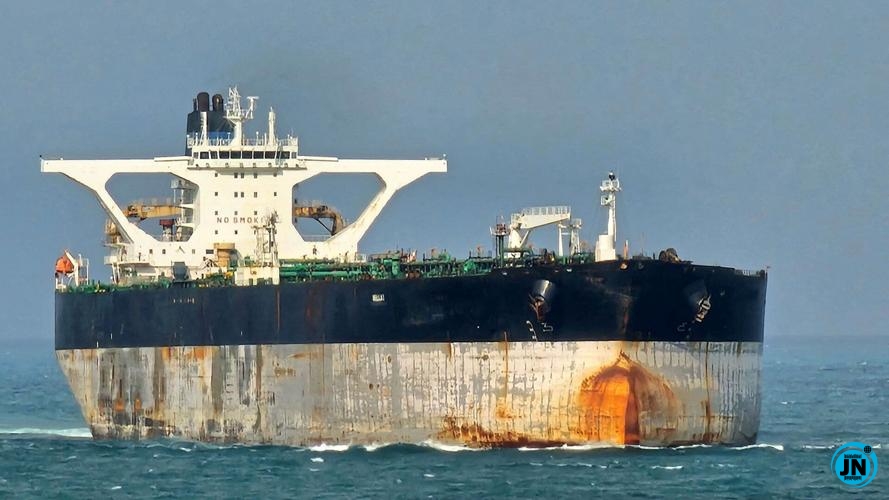
The United States has seized a Russian-flagged oil tanker in the North Atlantic Ocean after an extended, weeks-long pursuit, highlighting Washington’s intensified efforts to enforce sanctions against Venezuelan-linked oil shipments, officials say.
The vessel, originally named Bella 1 and later renamed Marinera, was intercepted in international waters under a federal court warrant for allegedly violating U.S. sanctions. The operation involved the U.S. Coast Guard, military assets, and other federal agencies, reflecting the administration’s determination to disrupt sanction-evasion networks at sea.
The tanker’s journey began near Venezuelan waters, where initial boarding attempts by U.S. forces were resisted. The ship then switched off its tracking systems, changed its name, and reflagged under Russia in an attempt to evade capture. Despite these measures, U.S. forces tracked the vessel across the Atlantic for more than two weeks, using aerial surveillance, naval cutters, and patrol aircraft until it was seized south of Iceland.
Russia condemned the seizure, calling it a violation of international maritime law and describing it as an act of “piracy,” while demanding the safe repatriation of the Russian crew aboard the tanker.
The operation is part of a broader U.S. campaign targeting so-called “shadow fleets” and unauthorized oil flows connected to Venezuela and other sanctioned entities. Officials say the move underscores the United States’ readiness to enforce sanctions far beyond its territorial waters, though critics note it may pose complex legal and diplomatic challenges.
The interception of the Marinera represents a rare and high-profile example of U.S. forces taking control of a Russian-flagged vessel in international waters, emphasizing the intersection of maritime law, geopolitics, and energy security.