
Apostle Johnson Suleman has publicly condemned the recent confrontation involving Minister of the Federal Capital Territory, Nyesom Wike, and Lieutenant Yerima, which went viral on social media and sparked widespread online debates.
The altercation, which occurred in November, reportedly involved a dispute over land, during which the FCT Minister clashed with a naval officer, Lieutenant Yerima. The video of the heated exchange quickly circulated online, drawing reactions from Nigerians who criticized both parties for their behaviour.
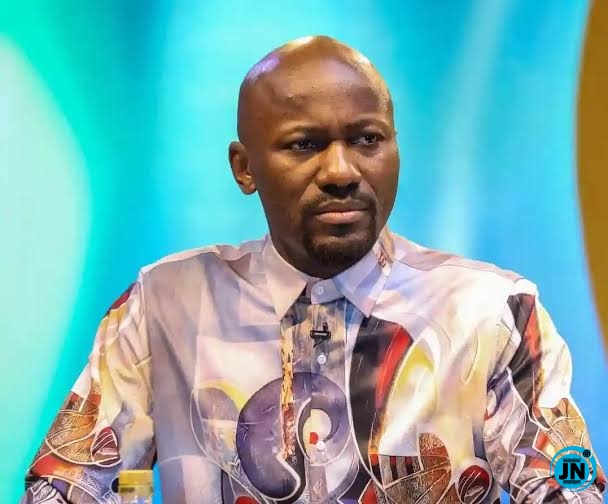
Apostle Suleman speaks on the viral clash
During a recent church service, Apostle Suleman expressed his disapproval of both men’s conduct, describing the incident as an embarrassing reflection of deeper leadership and societal challenges in Nigeria. He emphasized that the behaviour displayed during the altercation highlights the lack of decorum and respect for authority within some sectors of the country’s leadership structure.
Suleman specifically criticized Lieutenant Yerima for acting above his rank and disrespecting the chain of command, arguing that a naval officer should not demean a police officer in such a confrontational manner. He explained that such actions set a poor example for young officers and the public alike.
The cleric also held Minister Wike accountable for provoking the situation, noting that the Minister’s approach and actions contributed to the escalation. While Suleman admitted he does not personally like Wike, he insisted that personal dislike should not be used as justification for defending or condoning wrongful behaviour. He argued that accountability and ethical conduct must transcend personal biases.
Apostle Suleman further remarked that the incident is emblematic of broader systemic issues in Nigeria, highlighting that both the oppressor and the oppressed often mirror each other’s behaviour, perpetuating cycles of disrespect and poor leadership. He stressed that the viral confrontation is not just an isolated event but a representation of societal dysfunction and leadership challenges that Nigerians face regularly.
In his sermon, Suleman stated:
“I don’t like the minister, I don’t like him. He behaves like a tout. I know him, he knows me. This is democracy; if you see somebody wearing a uniform, you call his boss. You don’t stand before him and tell somebody in uniform you are a fool—it takes a fool to know a fool. The fact that you hate a man, the fact that you don’t like a man, does not mean you support what is wrong. How can you be talking? You are a navy. You are not even a full-blown soldier. A navy, you are telling a policeman, I’m talking. That guy is a bully. They should hold him. That guy is a bully. ‘I’m talking, police is talking’. I see policemen are under you. I just got disgusted. That’s a representation of Nigeria. He could not take the minister talking to him. He responded. But the police should take his nonsense. Have you seen Nigerians? That was just Nigeria. The oppressor and the oppressed is equally an oppressor.”
A video of Apostle Suleman’s statement has since circulated widely on social media, attracting significant attention and sparking discussions about leadership, respect for authority, and the conduct of public officials in Nigeria.
Apostle Johnson Suleiman is brutal 😭
Wike will hate this man pic.twitter.com/VEMSoqXfSd
— DON “Tobechukwu” Ade 👑 (@Row_Haastrup) December 10, 2025
The incident has reignited conversations around civility, public conduct, and accountability in Nigeria, with many citizens echoing Suleman’s call for leaders and public officials to demonstrate restraint, ethical conduct, and respect for institutional hierarchies in their professional and personal interactions.